

As a professional Asian garment manufacturer with years of experience in the clothing industry, Light Fog Garment (Dongguan, China) has its own skilled R&D team with extensive self-developed capability and dedicated in-house production lines. With an impressive monthly capacity of 400,000 pcs, Light Fogcovers a wide range of categories including T-shirts, hoodies, sweatshirts, jackets, jeans, leggings, dresses, and activewear to support both OEM and private-label programs.
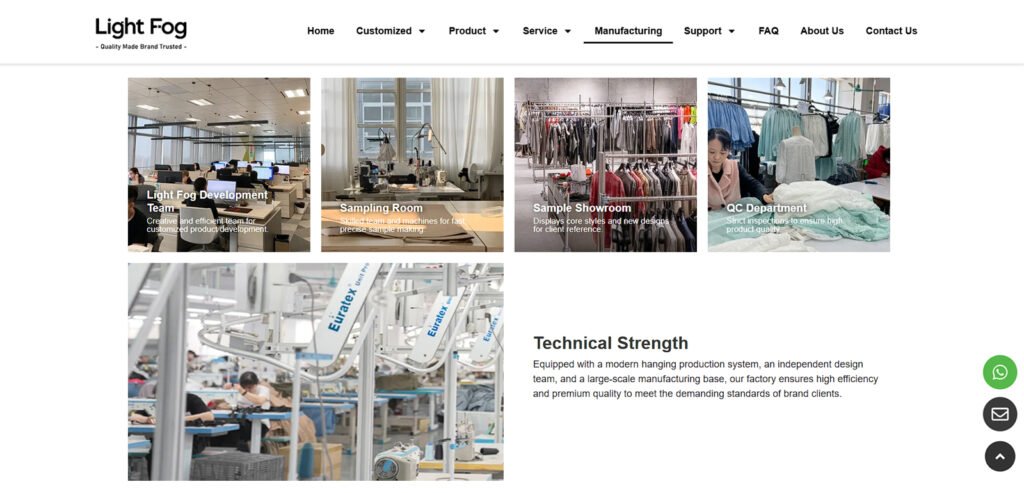
Company Overview:
Competing in Asia’s fast-moving apparel market is challenging, but Light Fog believes that quality speaks for itself and customer experience comes first. Through daily, in-line production monitoring and continuous optimization under a strict QC management system, the company consistently delivers durable, high-quality garments that meet international standards and brand expectations.
Light Fog manages to maintain optimal quality while maximizing production efficiency. Backed by significant investments in advanced machinery and digital workflows, the team offers fast turnarounds—as quick as 10–15 days for repeat/private-label orders (project-dependent)—and supports global shipping, making Light Fog a punctual, efficient clothing manufacturer for brands worldwide.
Pros
Private label and fully custom designs available
Large production capacity of 400,000 pcs/month
Wide product range including casualwear, streetwear, and dresses
High-quality results with quick private-label lead times
Responsive, solution-oriented customer service
Cons
Based in China, may be hard for on-site factory inspection
- Orders overseas may take longer to arrive
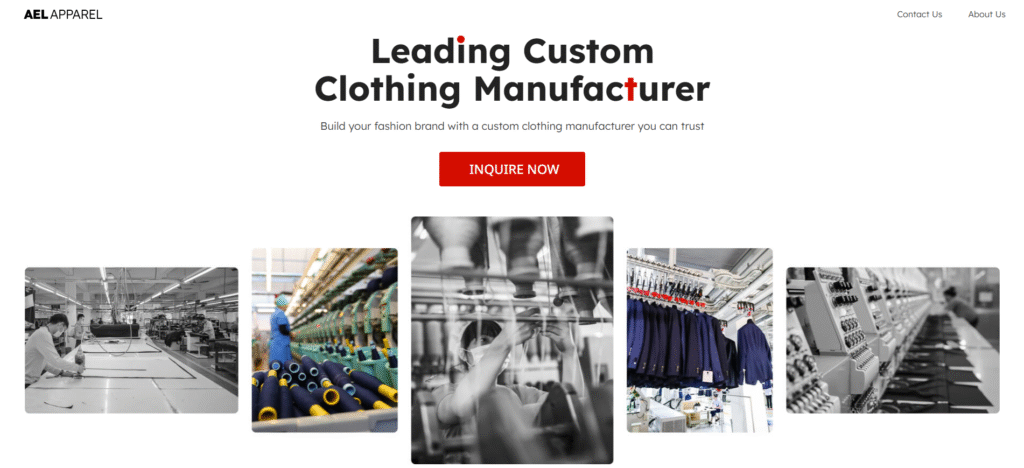
Company Overview:
AEL Apparel is a leading garment manufacturer in Thailand, specializing in sportswear, casual wear, and activewear. With a modern production facility and a team of experienced designers, AEL offers customized OEM and private-label solutions for brands worldwide.
Advantages:
Sustainable and eco-friendly material options
Large-scale production with fast turnaround
Strong design and pattern-making team
Pros:
High-quality finishes and fabrics
Supports both bulk and small-batch orders
Flexible design customization
Cons:
Limited shipping options outside Asia
Smaller production capacity compared to large Chinese factories
Company Overview:
Atelier Chiang Mai combines traditional Thai craftsmanship with modern production technology, producing premium casual wear and high-end designer apparel. They provide full OEM and private-label services, helping brands turn unique concepts into reality. Their use of sustainable fabrics and meticulous detailing ensures garments meet luxury fashion standards. Atelier Chiang Mai is a preferred choice for designers seeking boutique-style apparel manufacturing in Asia.
Pros:
High-end design and craftsmanship
Sustainable fabrics
Personalized private-label services
Cons:
Smaller production capacity suitable mainly for premium brands
Company Overview:
Located in Pakistan, Almidani is known for cotton garments, casual wear, and denim products. They combine skilled labor with modern machinery, delivering consistent quality and efficiency. Almidani offers design collaboration, sampling, bulk production, and private-label manufacturing, serving international brands. Their emphasis on affordable pricing, high-quality materials, and timely delivery makes them a reliable partner for global apparel sourcing.
Pros:
Competitive pricing
Skilled workforce and modern machinery
Full OEM/private-label support
Cons:
Longer shipping times for some international orders
Company Overview:
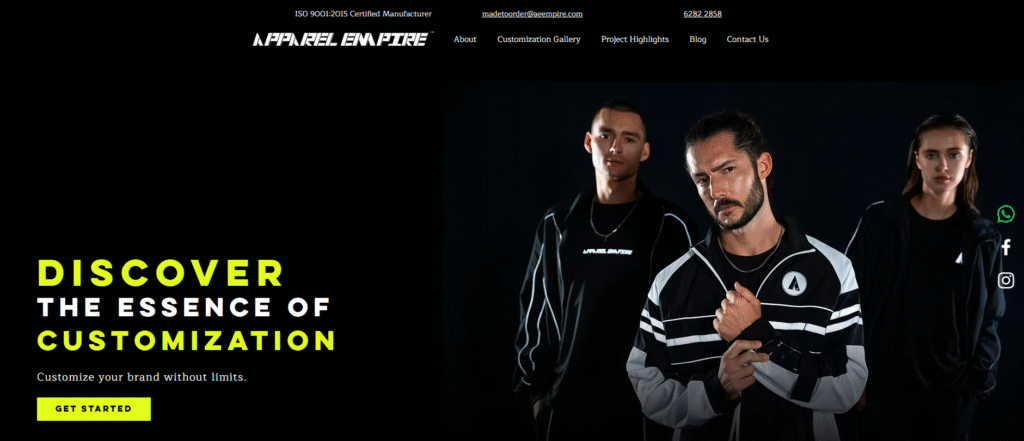
Apparel Empire in Bangladesh specializes in T-shirts, hoodies, dresses, and activewear. They focus on sustainable fabrics, ethical labor, and advanced production processes. Offering complete OEM and private-label services, Apparel Empire helps brands from design to bulk production. Their large-scale facilities and experienced teams ensure high-quality garments with timely delivery, making them a trusted partner for international fashion brands.
Pros:
Sustainable fabrics and ethical practices
Large production capacity
Full-service manufacturing
Cons:
Some customization may require longer lead times
Company Overview:
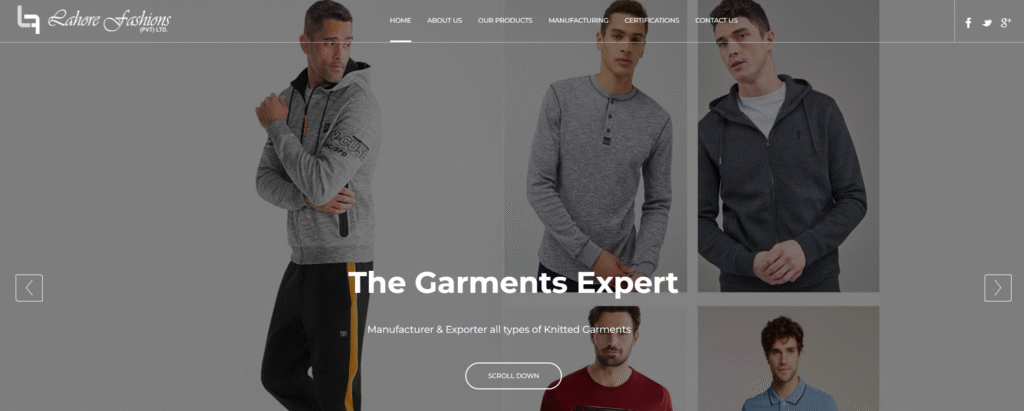
Lahore Fashions blends traditional Pakistani tailoring with modern production, delivering formal wear, casual wear, and streetwear. They provide pattern making, sampling, embroidery, and bulk production, emphasizing quality control and design flexibility. Their ethical practices and use of sustainable materials make them a notable player in the Asian apparel industry.
Pros:
Skilled tailoring and embroidery
Flexible custom designs
Ethical and sustainable practices
Cons:
Limited international marketing visibility
Company Overview:
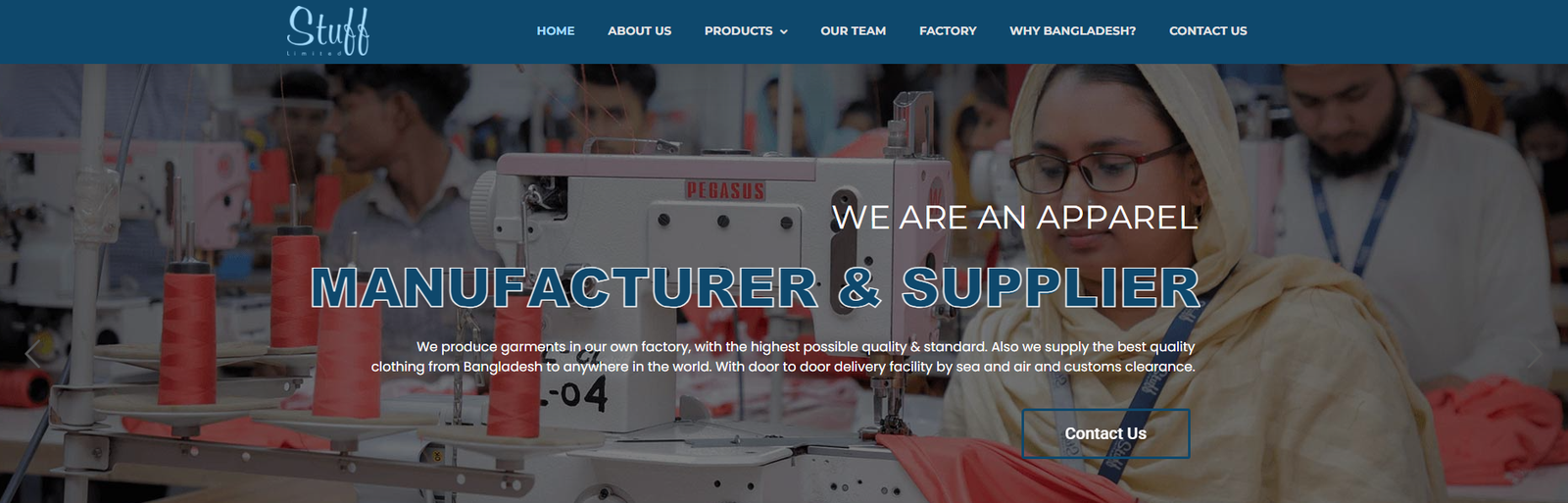
Based in India, Stuff Limited produces activewear, casualwear, and dresses for global clients. Their digitalized workflows, high-quality fabrics, and sustainable production ensure efficient manufacturing. They offer OEM, private-label, and design collaboration, supporting brands from concept to finished product. Their commitment to quality assurance, quick turnaround, and competitive pricing makes them a preferred partner in Asia.
Pros:
Efficient digital workflow
Sustainable and high-quality fabrics
Comprehensive manufacturing support
Cons:
Smaller production scale compared to mega factories
Company Overview:
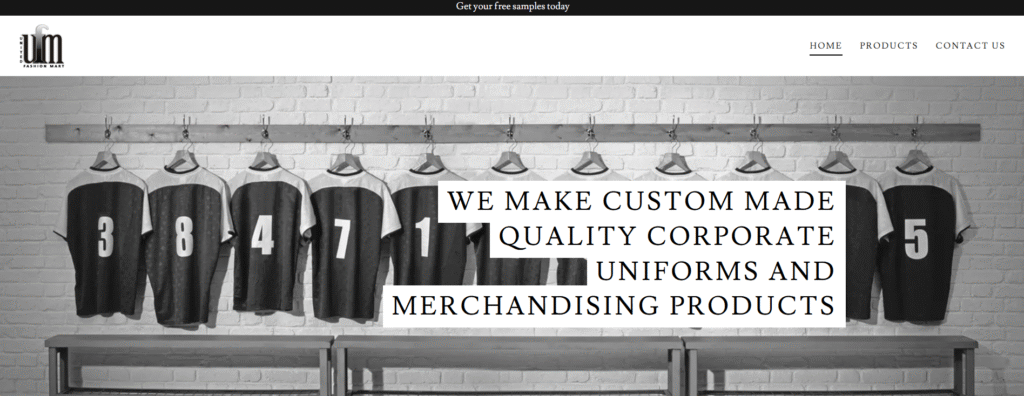
United Fashion Mart specializes in mass-market clothing, including T-shirts, hoodies, denim, and dresses. With large-scale facilities, they ensure efficient workflow and strict quality control. Offering OEM and private-label solutions, United Fashion Mart helps brands reduce production costs while maintaining high standards, making them a reliable partner for global brands.
Pros:
Large-scale production
Strict quality control
Competitive pricing
Cons:
Limited focus on premium/custom designs
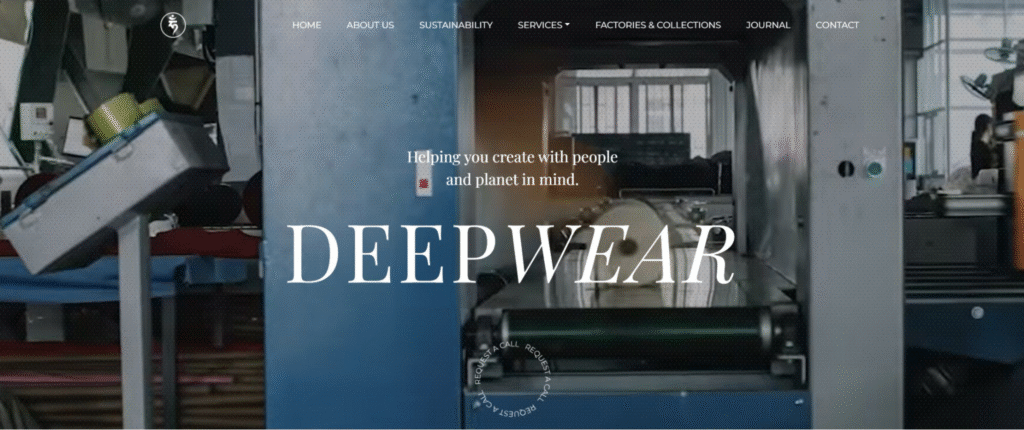
Company Overview:
Deepwear produces T-shirts, hoodies, sweatshirts, and dresses with a focus on high-quality fabrics, ethical production, and efficient processes. They provide full-service OEM and private-label solutions, including design support, sampling, bulk production, and quality control. Deepwear is known for sustainability, customer satisfaction, and timely delivery, making them a trusted partner for international apparel brands.
Pros:
Sustainable production
Full-service OEM support
Experienced production team
Cons:
May require longer shipping times for overseas orders
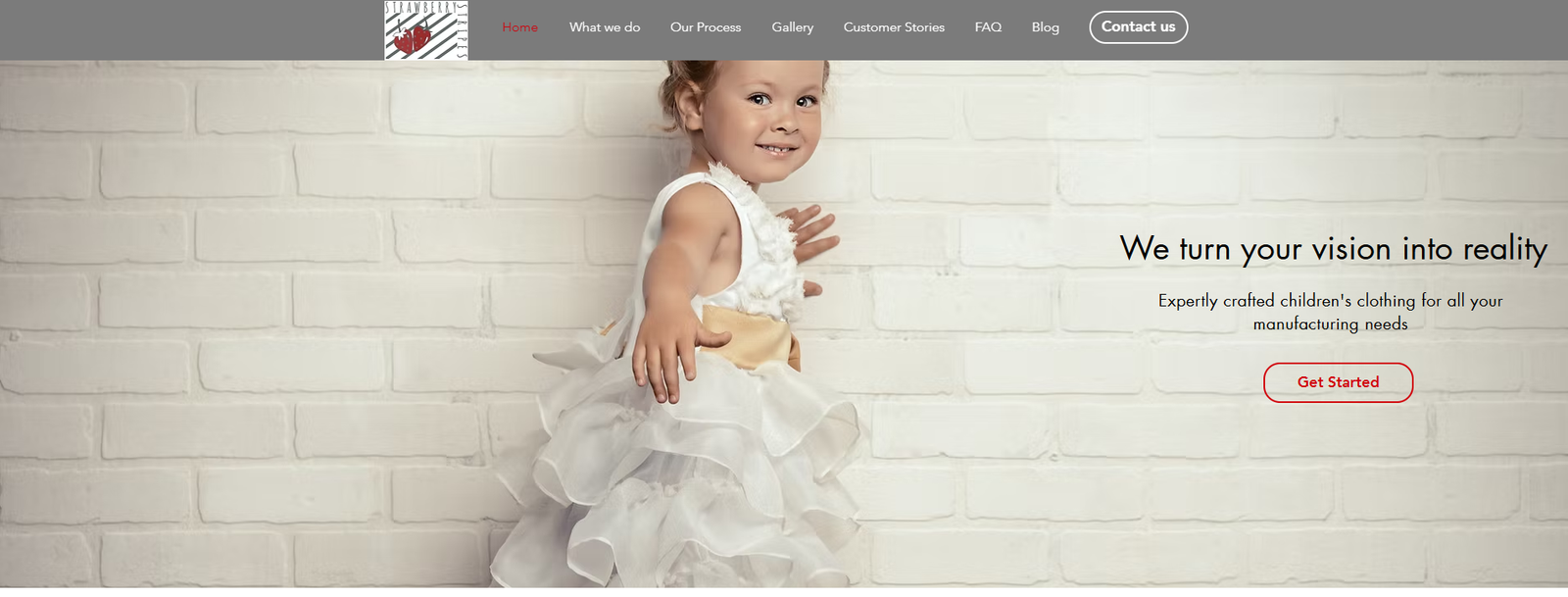
Company Overview:
Based in Vietnam, Strawberry Stripes specializes in streetwear, casual wear, and dresses, offering OEM and private-label services. Their production lines integrate modern machinery with skilled craftsmanship, ensuring high-quality garments with attention to detail. Strawberry Stripes also provides design collaboration, sampling, and bulk production, making them a one-stop solution for international brands. Their emphasis on sustainable fabrics and ethical production positions them as a reputable manufacturer in Asia.
Pros:
Skilled craftsmanship and modern production
Sustainable materials
Full-service manufacturing
Cons:
Limited marketing presence outside Asia
Why Are There Many Clothing Manufacturers in Asia?
Asia has become the hub for clothing manufacturing due to several key factors:
● Lower Labor Costs – Countries like China, Bangladesh, Vietnam, and India have comparatively lower labor costs, making production more affordable for brands.
● Established Supply Chains – Asia has decades of experience in textile and garment production, with well-developed networks of fabric suppliers, accessory manufacturers, and logistics providers.
● Large Workforce – A skilled and abundant workforce allows factories to handle large-scale orders efficiently while maintaining quality.
● Advanced Manufacturing Technology – Many Asian factories have invested in modern machinery and production techniques, combining traditional craftsmanship with automation.
● Government Support and Export Incentives – Many Asian countries offer incentives, tax breaks, and infrastructure support to boost the textile and apparel industry.
What Are the Benefits of Partnering With Asian Clothing Manufacturers?
Partnering with manufacturers in Asia can bring several advantages for brands looking to scale:
● Cost-Effective Production – Lower labor and material costs help brands achieve better profit margins.
● Access to Expertise – Experienced manufacturers offer design collaboration, pattern-making, and quality control expertise.
● High Production Capacity – Asian factories can handle both small batch orders and mass production for global distribution.
● Diverse Material Options – Many factories offer a wide range of fabrics, from cotton and denim to sustainable materials and specialty textiles.
● Faster Time-to-Market – With established logistics networks and efficient production processes, brands can bring products to market more quickly.
Where Can I Find a Reliable Clothing Manufacturer in Asia?
Finding the right manufacturer requires research and verification. Here are some ways to locate reliable partners:
● Alibaba / Global Sources – Online B2B platforms list verified manufacturers with reviews, certifications, and production capabilities.
● Trade Shows – Events like Canton Fair (China), Apparel Sourcing (Bangladesh), and Vietnam Textile & Garment Expo provide direct access to suppliers.
● Industry Networks / Referrals – Networking with other brands or using sourcing agents can lead to trusted manufacturers.
● Factory Visits – Personally visiting factories allows you to inspect production quality, labor conditions, and capacity firsthand.
● Third-Party Verification Services – Companies offering audits, quality inspections, and certifications can help validate a manufacturer’s reliability.